
Banaras Hindu University (BHU) has received approximately Rs 15 crore in funding from the Indian Council of Medical Research (ICMR) for six biomedical research projects. These projects aim to address critical national health priorities, including cancer detection, antimicrobial resistance, and pediatric septic shock, fostering advanced research and improving patient care.

State-run defence major Hindustan Aeronautics Limited (HAL) has delivered LCA Tejas Final Operational Clearance twin-seater trainers and HTT-40 basic trainer aircraft to the Indian Air Force, along with Dhruv next-generation helicopters to Pawan Hans. This significant handover, witnessed by Defence Minister Rajnath Singh, marks a crucial step in India's journey towards self-reliance in the aerospace sector, showcasing HAL's diverse capabilities in military, civil, and training aviation.

Econz IT Services, in partnership with Google Cloud, has launched Bengaluru's first Gemini Enterprise Experience Centre. This centre provides an immersive environment for businesses to develop and deploy advanced Agentic AI solutions, marking a significant step in enterprise AI innovation in the region.

There is no answer to the question of how IN-SPACe invited EOIs for ISRO's mature rockets and whether it was based on any government policy decision.
Human skeletal remains from the ancient Indus-Saraswati Civilisation site of Rakhigarhi in Haryana have been formally transferred by the Archaeological Survey of India (ASI) to the Anthropological Survey of India (AnSI) for detailed scientific investigation. This transfer, under a new MoU, aims to advance multidisciplinary research into one of the largest known settlements of the Indus-Saraswati Civilisation, with archaeologists having uncovered eight burials, including three complete skeletons, during recent excavations.
West Bengal has launched an Emerging Quantum and Semiconductor Technologies (EQST) section at CSIR-CGCRI to attract investments and position the state as a hub for next-generation technology. Minister Kalyan Chakraborti highlighted India's need to invest in these crucial sectors and outlined the state's plans to collaborate with institutions and leverage budget initiatives to foster research and start-ups.

The Union health ministry has deployed a National Joint Outbreak Response Team (NJORT) to Gujarat and Rajasthan to strengthen the response to the ongoing Chandipura Virus Disease (CHPV) outbreak.
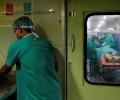
Prof Ajit Kumar Chaturvedi, Vice-Chancellor of Banaras Hindu University, highlighted Artificial Intelligence's transformative potential in healthcare, emphasising its role in augmenting doctors' capabilities and enhancing efficiency. Speaking at PGIMER's Foundation Day, he stressed the need for India to develop AI solutions tailored to its unique healthcare realities, moving beyond being a mere consumer of Western-trained systems. PGIMER Director Vivek Lal also detailed the institute's expansion and commitment to affordable healthcare.

A new study published in AGU Advances reveals that extreme heat events are becoming more frequent and expanding beyond traditional summer months globally. This expansion is asymmetric, occurring earlier in spring in regions like western Europe and northwestern India, and later into autumn in areas such as the western US and eastern China. Researchers highlight the challenges this poses for human acclimatisation and community preparedness, as existing infrastructure like cooling centres are built around historical summer calendars.

Hindustan Aeronautics Limited (HAL) has delivered LCA Tejas FOC twin-seater trainers and HTT-40 basic trainer aircraft to the Indian Air Force, and Dhruv next-generation helicopters to Pawan Hans. This significant handover, witnessed by Defence Minister Rajnath Singh, marks a crucial step in India's journey towards self-reliance in the aerospace sector, showcasing HAL's capabilities across military, civil rotary-wing, and pilot training aviation.

Karnataka Chief Minister D K Shivakumar announced the establishment of India's first government-driven Artificial Intelligence University and an AI Hub in Bengaluru. This initiative aims to position Karnataka as a global leader in responsible AI innovation, fostering talent, research, and collaboration. The state seeks to become an AI-native state, leveraging AI to improve governance and daily life across various sectors.

Nagaland Governor Nand Kishore Yadav has advocated for increased use of technology, especially drones and geospatial systems, to enhance governance and create employment opportunities for the state's youth. During his visit to the Nagaland GIS and Remote Sensing Centre and Drone Centre of Excellence, he highlighted the broad applications of drone technology and the importance of skill development. The centre is actively training youth in various drone-related courses, aiming to meet the demand for drone pilots in the Northeast.
Researchers at BRIC-RGCB in Thiruvananthapuram have developed a novel nanopore-based sensing technology. This innovation allows for the early and highly sensitive detection of biomarkers associated with neurodegenerative diseases like Parkinson's and ALS, addressing a critical challenge in current diagnostic methods. The technology, published in Nature Nanotechnology, uses self-assembling dual-diameter nanopore sensors to identify disease-specific biomarkers even at low concentrations.

State-run Hindustan Aeronautics Limited (HAL) has delivered LCA Tejas FOC twin-seater trainers and HTT-40 basic trainer aircraft to the Indian Air Force, and Dhruv Next Generation helicopters to Pawan Hans. This significant handover, attended by Defence Minister Rajnath Singh and Civil Aviation Minister K Rammohan Naidu, underscores India's progress towards self-reliance in aerospace, strengthening both military and civil aviation capabilities with indigenous platforms.
The Centre for Studies of International Relations (CSIR) has established the International Centre for Civilizational Studies "Manas and Mahabharata" in Bishkek, Kyrgyzstan, in collaboration with the Manas National Academy. The inauguration also saw the release of the first Hindi translation of the Kyrgyz epic "Manas," aiming to foster scientific, educational, and cultural cooperation between India and Kyrgyzstan.
Experts at AI Manthan 2.0 in Kanpur stressed the need for Artificial Intelligence to be customised for India's specific requirements in education, healthcare, agriculture, and governance. Discussions highlighted the development of local language models, AI solutions for farmers like crop loss assessment and a single-window platform, and AI's role in healthcare for diagnosis and reducing doctors' workload, all while ensuring data privacy through federated learning.
Researchers from the Indian Institute of Science (IISc) and Technical University of Denmark have developed a recombinant antivenom that provides broad protection against the venom of spectacled cobras, monocled cobras, and Indian king cobra species in mice. This lab-produced antivenom offers a next-generation solution to traditional animal-derived antivenoms, addressing issues like variability and limited species coverage.
Robotic surgery is poised to transform healthcare in Delhi, expanding access to specialised expertise through the Indian-developed SSI Mantra system. Delhi is emerging as a hub for advanced surgical care, with successful implementations at Rajiv Gandhi Cancer Institute, including pioneering telesurgery. This technology aims to make robotic surgery more accessible and sustainable, fostering an ecosystem for training and innovation.

Russian President Vladimir Putin has proposed a new investment platform, based on the New Development Bank (NDB), to fund projects in trade, infrastructure, logistics, and technology across BRICS nations, emphasising that the grouping's expanding economic cooperation is not 'against anyone' but aims to advance members' national interests.
Andhra Pradesh Chief Minister N Chandrababu Naidu has approved the establishment of India's first dedicated Quantum and AI University campus in Amaravati by NIELIT. This significant project, funded by the MeitY, Government of India, will focus on advanced technologies like Quantum, AI, and Semiconductors, integrating education, research, and entrepreneurship.
BRICS leaders, in their New Delhi Declaration 2026, have called for wider access to Artificial Intelligence resources and stronger international cooperation to ensure the technology is safe, secure, inclusive, and reliable. The declaration outlines a broad technology agenda covering AI, cybersecurity, digital public infrastructure, telecom, quantum technologies, and advanced manufacturing, committing to implement the grouping's statement on 'Global Governance of Artificial Intelligence'.

SCTIMST and Invasive Technologies have launched "Chitra Core," a new drug-eluting coronary stent designed with significantly less metal to reduce complications. This indigenous innovation, developed in collaboration, aims to provide advanced and cost-effective cardiac care, building on decades of Indian medical device development. The institute is also developing a unique TiN-coated stent for global markets.
Aequs Group, in collaboration with IIT-Dharwad, has established an advanced research and development facility for materials science and manufacturing innovation at the IIT-Dharwad campus.

The Haldwani forest division has launched India's first AI-based forest acoustic surveillance system. This innovative technology uses AI, acoustic sensors, and long-range wireless communication to detect illegal logging, poaching, and other suspicious activities in real-time, even in remote areas. Powered by solar energy, the system provides continuous monitoring, significantly enhancing forest protection, wildlife conservation, and biodiversity monitoring efforts.

Chinese officials warn that glaciers on the Tibetan Plateau are becoming increasingly unstable, leading to a higher risk of flash floods and other disasters, as evidenced by a recent deadly ice-rock avalanche near the Nepal-Tibet border. The region has seen a significant reduction in glacier area, and scientists are calling for advanced monitoring systems to predict these complex events.

The larger question raised by the associations is simple: If ISRO is no longer to manufacture launch vehicles, what will happen to the institution's accumulated capabilities and the people who built them?

The highlight of the successful BRICS Summit was its ability to deliver a joint statement that all members, including Iran and the United Arab Emirates, embroiled in the war in West Asia, signed.
Chinese President Xi Jinping has called for global collaboration in Artificial Intelligence development, stating it should be a "symphony" rather than a "solo performance." His remarks came at the World Artificial Intelligence Conference (WAIC) in Shanghai, where 29 countries also signed an agreement to establish the World Artificial Intelligence Cooperation Organisation (WAICO), an independent intergovernmental body headquartered in Shanghai. China also pledged 5,000 AI research projects and training for developing nations.
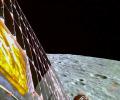
NASA has invited ISRO to join its ambitious Moon Base mission to establish a permanent lunar outpost near the Moon's South Pole, aiming for scientific discoveries and future deep space exploration. This invitation follows discussions at the Civil Space Joint Working Group meeting in Bengaluru, where both nations also advanced cooperation under the Artemis Accords and the TRUST initiative.

'Improved law and order and transparent governance have helped change UP's investment image.'

Built as an expendable, short-duration turbojet engine for single-mission applications, it can power tactical cruise missiles, anti-ship missiles, and long-range loitering munitions.

While charger deployment is yet to begin, the scheme has supported the sale of 2.65 million EVs as of July 22.

Chief Justice of India Surya Kant stated that while artificial intelligence (AI) can augment judicial reasoning, it cannot substitute judicial conscience, and a permanent apex body is proposed to supervise AI adoption and accountability within the judiciary.

Chinese President Xi Jinping called for global collaboration in artificial intelligence development, emphasising a "symphony of global collaboration" over a "solo performance" by any single nation. Speaking at the World Artificial Intelligence Conference in Shanghai, Xi highlighted the need for ethical AI governance, shared prosperity, and addressing challenges like the widening digital divide. He also announced China's commitment to support developing countries with 5,000 AI research projects and training programmes. The event also saw 29 countries sign an agreement to establish the World Artificial Intelligence Cooperation Organisation (WAICO) in Shanghai.

India and China are in what experts call 'a cooperation-versus-competition situation'.

IIT Madras, in partnership with Herbalife International India, has inaugurated India's first Centre of Excellence for plant cell fermentation technology. This new facility aims to be a national hub for sustainable innovation, research, and development, focusing on producing herbal biomass, enriched extracts, and high-value phytochemicals, while bridging the gap between lab research and industrial applications.

Researching Japan was like going down a rabbit hole. There is just so much to see and do, but I finally decided we would stick to the 'Golden Route' of Tokyo, Osaka and Kyoto, notes Radhika Mittal.
TEXMiN Foundation, IIT (ISM) Dhanbad has signed an agreement with the University of Pretoria, South Africa, for research collaboration in critical minerals, rare earth element processing, recycling, extraction technologies and advanced mining innovation.
Andhra Pradesh and Punjab National Bank (PNB) have signed an MoU to establish the PNB Quantum Finance Hub at Amaravati Quantum Valley. This initiative aims to foster innovation and adopt next-generation technologies like AI and Quantum Computing in the banking sector, focusing on cybersecurity, fraud detection, and customer experience.
Veteran physicist Professor Umesh V Waghmare has been appointed as the Secretary of the Department of Science and Technology. Currently a professor at JNCASR, Bengaluru, his appointment was approved by the Appointments Committee of the Cabinet. He succeeds Professor Abhay Karandikar and brings a distinguished academic background from IIT-Bombay, Yale, and Harvard to the role.
